Home » Excel in Product Development: Why the Spreadsheet Model Hinders R&D Excellence » From R&D Lag to Data-Driven Innovation: How the UMYNO Suite Is Transforming Chocolate Development
The chocolate industry is currently undergoing an unprecedented period of disruption. As Deloitte’s study “Disruptors in the Chocolate Industry” clearly demonstrates, global cocoa procurement is coming under massive pressure due to climate change and plant diseases. The result is extreme price volatility: Cocoa prices have at times increased fivefold and remain difficult to predict. In addition to this price volatility, stricter ethical and regulatory requirements—such as the EU Deforestation Regulation (EUDR) and the CSRD—are increasing the pressure on manufacturers to comprehensively monitor their supply chains.
At the same time, the market is changing rapidly: Consumers are increasingly looking for healthier, reduced-sugar, and functional chocolate alternatives (“better-for-you”). Despite this enormous pressure to innovate, product development (R&D) in many companies is lagging behind technologically. While departments such as sales and marketing have long since shifted to cloud-based and automated workflows, development teams are often stuck in a “trap” of isolated spreadsheets, data silos, and manual coordination.
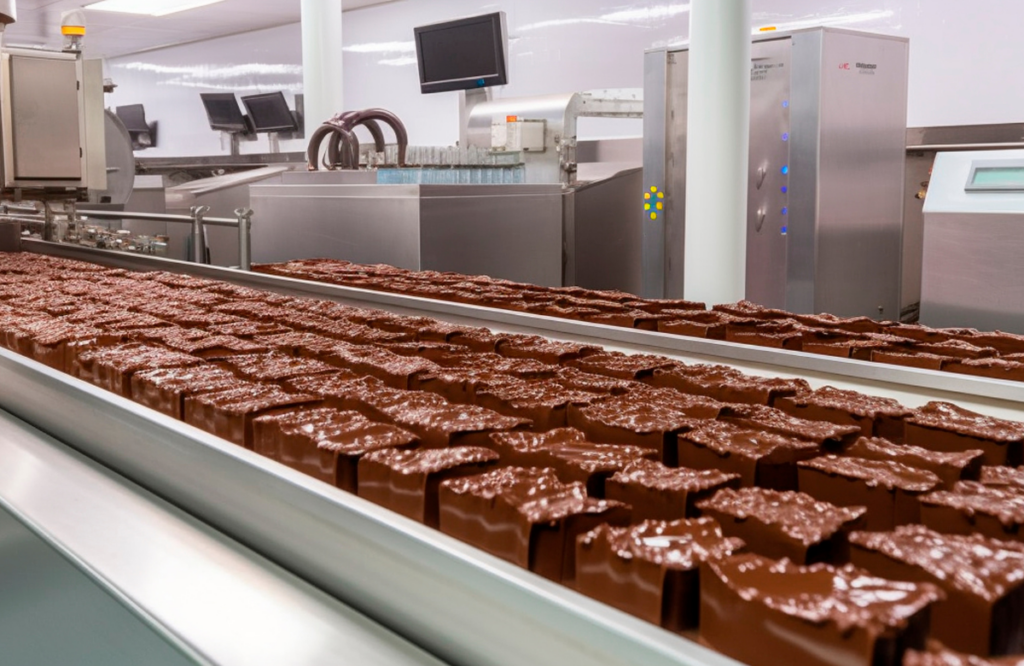
The result of these outdated structures is what is known as the “R&D lag”—a dangerous delay between the initial concept and the actual market launch. The traditional trial-and-error approach in the laboratory not only consumes enormous financial resources but also valuable time, which is often wasted on repetitive, routine administrative tasks.
These slow processes take their toll, especially in chocolate development. Chocolate thrives on a highly complex physical interplay of mouthfeel, melt, and texture. When recipes are adapted to meet clean-label requirements or to create vegan varieties—and, for example, the sugar or fat content is adjusted—essential properties such as viscosity and crystallization behavior shift dramatically. The risk of compromising flavor and quality is extremely high with such manual reformulations.

Innovations can no longer rely solely on outdated processes. To remain competitive in this volatile market environment, artificial intelligence offers modern product development a wide range of strategic options. This is precisely where the UMYNO Suite —a specialized, AI-powered smart platform for product development—comes in. Under the leadership of founder and CEO Prof. Dr. Christian Klein, UMYNO Solutions operates an AI worksuite that fundamentally transforms the R&D process.
How our smart platform is transforming the R&D process in chocolate manufacturing:
Schedule a free, no-obligation consultation today.
Artificial intelligence by no means replaces the sensory judgment of product developers; rather, it frees them from time-consuming routine tasks. The seamless integration of institutional formulation knowledge with intelligent automation has been proven to drastically reduce time-to-market—in practice, often by one-third of the previous development time. For medium-sized confectionery manufacturers, this shift from reactive management to data-driven product development is the key lever for securing future market share.

