Home » Excel in Product Development: Why the Spreadsheet Model Hinders R&D Excellence » Can mouthfeel be digitized? How subjective panel feedback can be translated into objective parameters
In food development, data-driven recipe development is becoming increasingly important. But how can one make a highly subjective perception objectively measurable and, above all, reproducible? On October 7, 2026, representatives from industry and academia met at the Fraunhofer Institute for Process Engineering and Packaging IVV in Freising to bridge this very gap.
The “ProteinPredict4Food” research project focused on developing a robust evaluation framework for plant-based alternatives. We at UMYNO participated as an industry partner on the project steering committee. In this article, we summarize our methodological insights and explain why the digitization of sensory tasting data is the key to drastically shortening R&D cycles.
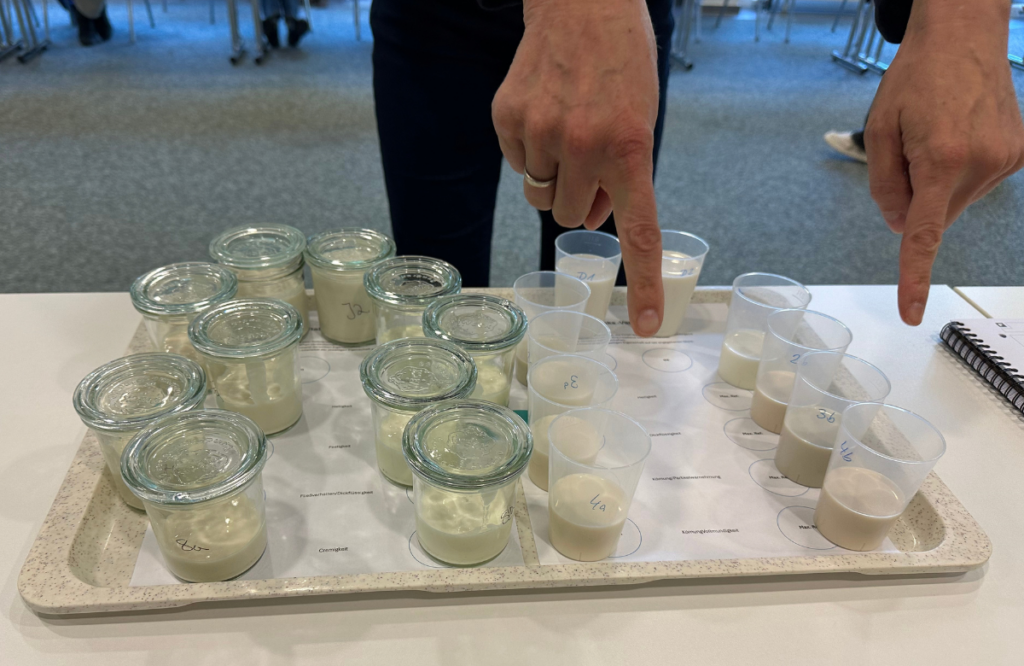
A key focus of the event, led by Prof. Dr. Ute Weisz, was the establishment of reliable reference ranges for evaluating alternatives to sausage and dairy products.
The challenge many R&D teams face in practice: Developers need clear, reproducible parameters to systematically align plant-based alternatives with their animal-based counterparts. Without such a framework, iterations in formulation development often devolve into unstructured trial and error.
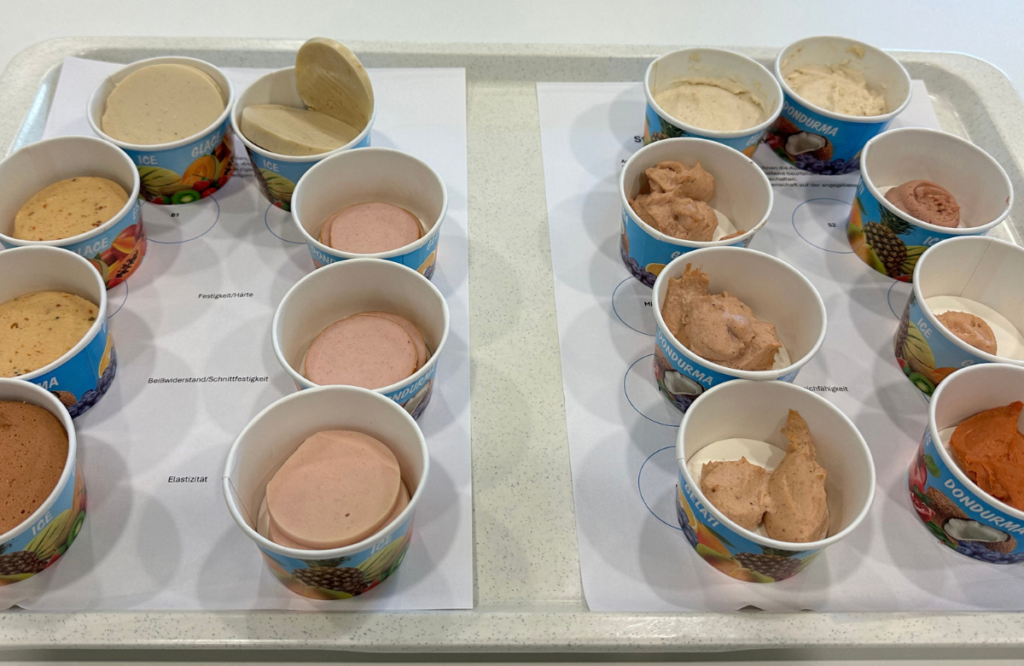
To make the theoretical evaluation criteria more tangible, a practical tasting of various sample products was on the agenda for the afternoon. The process was carried out with extreme methodological precision:
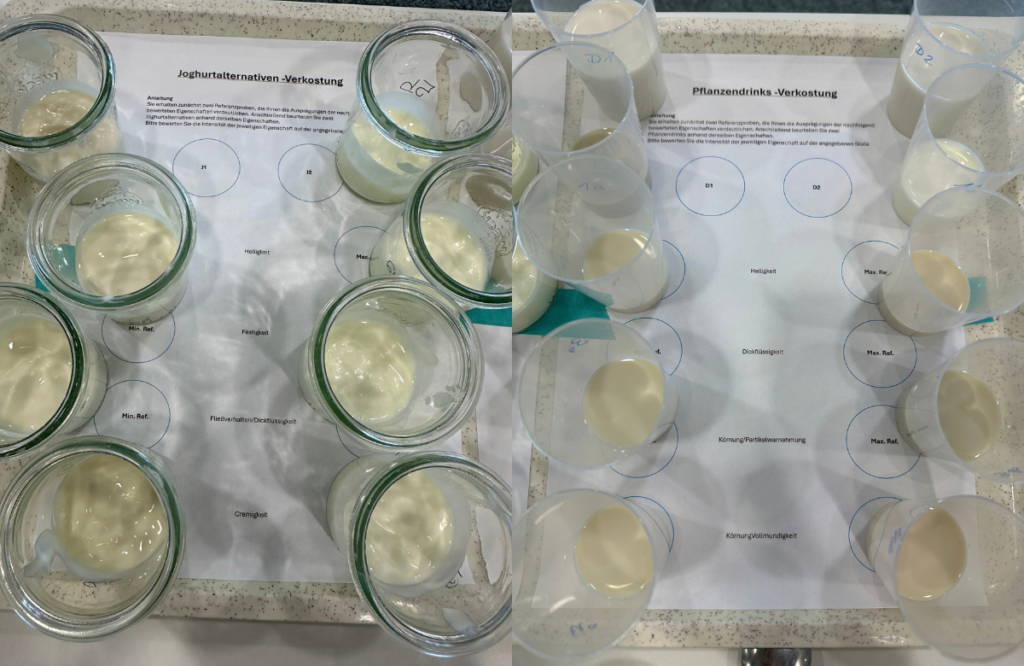
The most insightful part of the workshop was the direct comparison of the collected data. The experts’ personal, subjective assessments were compared on-site with the objectively measured physical values of the model products.
This led to in-depth technical discussions with the industry partners in attendance. It is precisely at this point that the complexity of product development becomes apparent: If subjective perception (e.g., the perceived “thickness”) does not correlate linearly with the rheological measurements, how do you translate this discrepancy into the next formulation iteration?
The discussion in Freising highlighted a core issue that drives us at UMYNO every day: the massive fragmentation of knowledge in the food industry. Sensory results from panel tests, physical specifications of raw materials, and strict compliance guidelines are stored in isolated Excel silos in most R&D departments.
This purely empirical approach reaches its limits, particularly when it comes to the highly complex task of replacing animal proteins with plant-based equivalents. To achieve sensory and functional equivalence to the original product, modern R&D departments must translate the physical world of molecules into digital simulation models.
Today, it's about more than just data management. The future of food technology lies in AI-based reasoning: systems must be able to understand physical and biochemical causal relationships and simulate the functional behavior of ingredients in real time.
When internal panel data is seamlessly integrated with objective analytics and the latest research data, it creates a genuine competitive advantage. Development cycles are significantly shortened because the stability and sensor characteristics of a new formulation can be predicted even before the first physical mixing process takes place in the pilot plant.
As a software partner to the food industry, we at UMYNO focus precisely on this area: We build the technological bridge to make this complex array of data tangible, measurable, and efficiently usable for developers through intelligent orchestration.
Schedule a free, no-obligation consultation today.

