Home » Excel in Product Development: Why the Spreadsheet Model Hinders R&D Excellence » Scaling Impact in the Food Sector: How Digitalization and AI Drive Social Growth
Our food system faces many challenges. Social enterprises that develop innovative solutions in the food sector make an indispensable contribution. But as soon as the initial concept proves successful, the next major hurdle arises: scaling up. What stands in the way of this growth? Experience shows that it is rarely a lack of capital, but almost always the wrong approach to scaling.
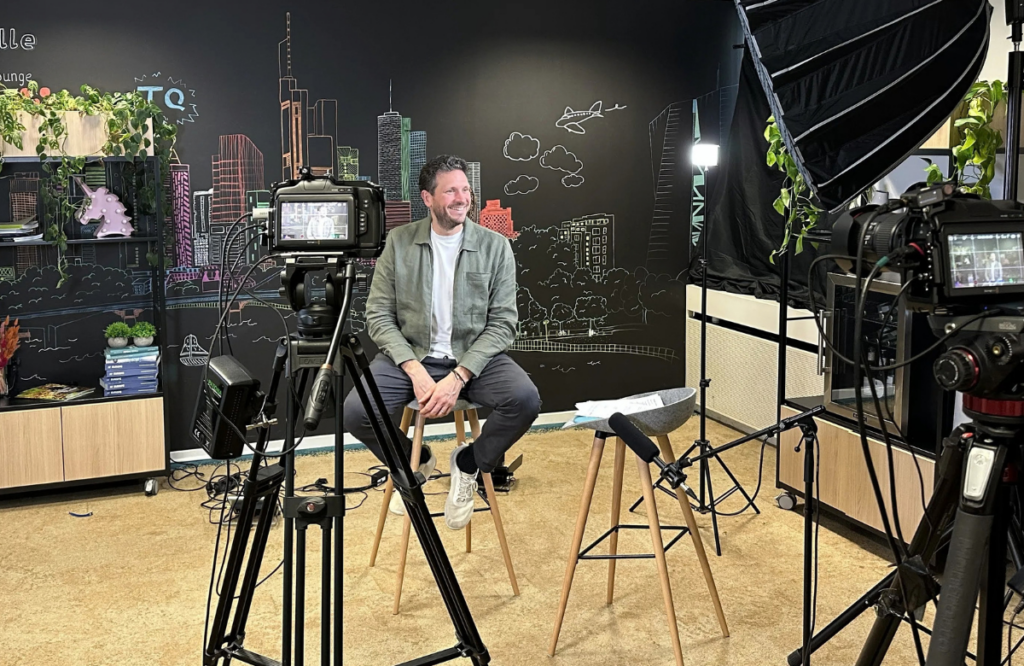
Our founder, Christian, was invited to participate in the Frankfurt Business Change Makers run by the Frankfurt Economic Development Agency . In this post, we apply the core concepts of the lesson to our area of focus at Umyno: How can impact organizations in the food sector use digitalization and artificial intelligence to multiply their impact without losing their DNA?
In traditional business, scaling is aimed at maximizing revenue, profit, and company size. Anyone who uncritically applies this logic to a social food startup risks losing sight of their actual goal. In the impact sector, the focus is on maximizing impact—and to achieve that, the organization doesn’t necessarily have to become huge.
Growth that is too rapid and unstructured carries two major risks:
To make the theoretical evaluation criteria more tangible, a practical tasting of various sample products was on the agenda for the afternoon. The process was carried out with extreme methodological precision:
Scaling means sustainably increasing the value for the target audience. A solution to this does not necessarily have to involve more staff or physical locations.
There are essentially four scaling models: organic growth, social franchising, open source, and digitalization (tech-enabled impact). Each of these models has its own advantages and disadvantages.
For food startups, the greatest leverage often lies in the fourth logic: digitalization. Physical services and analog processes are transformed into digital tools, platforms, or smart apps. The immense advantage of this strategy is that marginal costs approach zero.
This is exactly where digitalization and artificial intelligence come into play. AI-powered forecasts can help prevent food waste more effectively. Digital platforms connect producers, food rescuers, and consumers more efficiently than manual processes. Software automates the logistics and quality assurance processes in the food sector, which are often complex. The impact is scaled not by adding more people, but by intelligent technology.
Anyone who wants to bring about real social change in the food sector must do more than just address the symptoms. Profound change requires altering the underlying conditions. This systemic change arises at the points of interaction with other stakeholders:
Anyone who wants to change the system must be willing to share authorship. It's about evolving from a mere service provider to a catalyst for social change.
Scaling is a conscious decision. Before taking the next step in their growth, food startups should clarify four strategic criteria:
1. Proof of Concept: Has causal evidence been provided that the initiative achieves the intended effect?
2. Bottleneck Analysis: Where is the actual bottleneck? Are there manual processes that could be automated using software and AI?
3. Governance: Are internal processes equipped to manage complex digital partner structures?
4. Financing: Is the growth capital secured to finance technological development before it yields its full benefits?
Umyno is positioned right at this intersection. As a software company, we develop customized digital tools and AI solutions to automate processes in the food sector and sustainably scale the impact of social enterprises. We translate powerful social concepts into smart, scalable technology.
You can find the complete video lesson on strategic scaling as part of the Frankfurt Business Change Makers on the channels of the Frankfurt Economic Development Agency.
Schedule a free, no-obligation consultation today.

