Home » Excel in Product Development: Why the Spreadsheet Model Hinders R&D Excellence » Transparent Processes in Digital R&D Transformation
Digital R&D transformation is becoming increasingly important for many companies in the food industry. At the same time, there are often concerns about long-term, unwieldy IT projects. However, a successful agile onboarding process in food R&D demonstrates that a structured implementation can be achieved within 6 to 9 months when collaboration takes place on an equal footing.

The UMYNO philosophy is based on complete transparency—even when processes need to be adjusted at the start of a project. Digital transformation in food R&D is not a static product, but a dynamic process. The goal is to free product developers from the Excel trap and support them in using modern technologies. This is achieved through open communication and mutual trust from day one.
This approach ensures that the right project pace is found for each team.
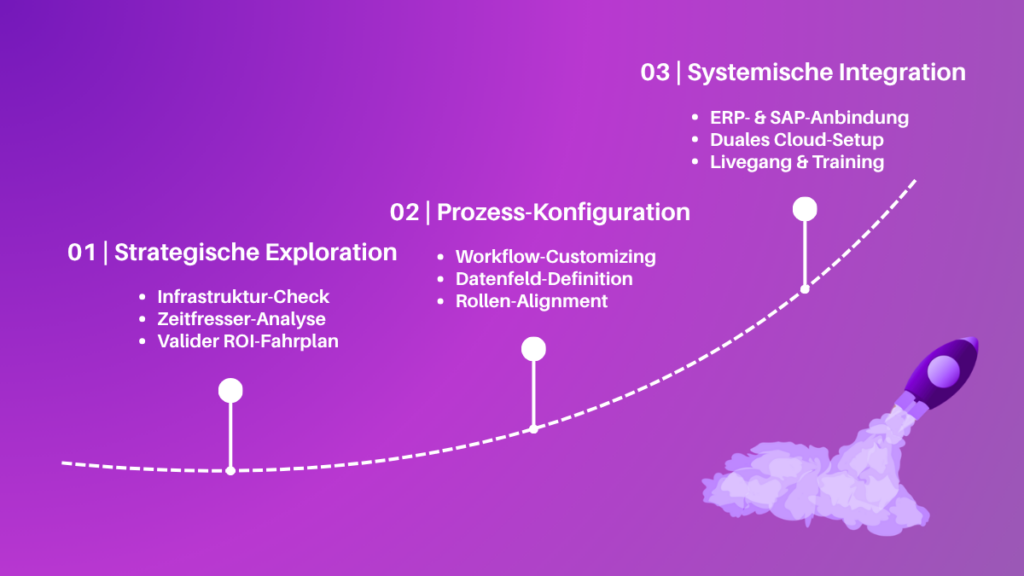
To reduce complexity and ensure the project remains manageable, implementation will take place in three main phases:
What happens: We analyze your existing IT infrastructure and work with you to develop a digital roadmap. In the process, we ruthlessly identify the specific time-wasters in your current workflows.
The result: a concrete project plan and a detailed benefit analysis that serves as a sound basis for decision-making.
What happens: The UMYNO Suite is tailored precisely to your specific workflows. We define custom data fields, map out your customer concept development process in detail, and assign clear user roles to ensure optimal access control.
The result: The platform serves as an integrated, intelligent engine for your entire value chain.
What happens: To ensure seamless data consistency, we integrate the UMYNO Suite with your existing system landscape (e.g., ERP systems such as SAP, LIMS, or cloud environments such as Azure/AWS) via our Connect interface.
The result: The platform serves as an integrated, intelligent engine for your entire value chain.
A change in the system always raises questions. We are familiar with these concerns from our day-to-day experience with established market leaders and small and medium-sized businesses:
Current Situation: Fragmented Excel spreadsheets make day-to-day work difficult. When an employee leaves the company, valuable recipe knowledge is lost. Searching for raw material data takes up a lot of time every day.
Approach: All data is consolidated into asingle source of truth, thereby safeguarding the company’s intellectual capital in the long term.
Question: Does the UMYNO Suite replace the existing SAP system?
Our answer: No. SAP remains the organizer for production and finance. As a specialized co-pilot, UMYNO bridges the creative gap before the ERP master data record and subsequently feeds it with clean, usable data.
Question: What happens to secret recipes when AI is used? Does the data end up on the open web?
Our response: Full data sovereignty is maintained. A dual cloud setup (hosting on AWS in Frankfurt, use of AI models via Azure) ensures that sensitive data is strictly controlled and remains fully protected.
Schedule a free, no-obligation consultation today.

